

As the new Critical Role season builds steam, leading up to the concluding part of its opening act and dividing the players into three distinct parties, viewers are still discovering more about the mysterious world of Aramán, crafted by Dungeon Master Brennan Lee Mulligan. Exandria, the universe of earlier campaigns, relied heavily on established D&D lore. In contrast, one of the most exciting aspects of Campaign 4 is how Mulligan reinterprets those common tropes to build something truly original.
A Fresh Perspective on Celestials and Demons
Fans have already been introduced to Aramán’s melancholy and warped interpretation of the Celestials, but episode 3, titled “The Snipping of Shears,” also provides some background about their fiendish counterpart, the infernal creatures. This label has been used somewhat broadly in the current season, but the intriguing part is that it also includes characters that would be categorized as “tieflings” in other D&D settings, including the demon warlock Tyranny, portrayed by Whitney Moore.
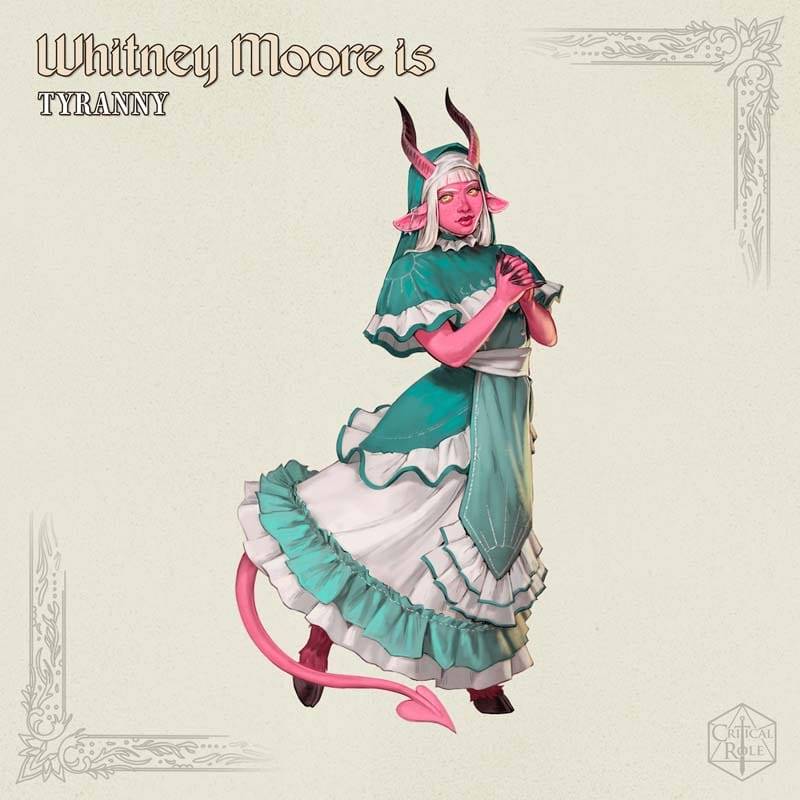
Traditionally, the fiend-touched race are mortals with infernal heritage, but it seems that in Aramán, they’re true demons whose souls have come to inhabit a mortal body as the result of a pact. In episode 3, we learned that these entities reside in a place called the Pit, ruled by an ominous being called the Shadow of Suffering. Ksha'aravi struck a deal with House Halovar, in which he would supply them demons to use as servants and as paragons of redemption for the Candescent Creed. As payment, he would receive mortal souls and some of the a mystical substance, a material with holy qualities created by the the family.
Understanding the Fresh Mythology
If you find all this puzzling, you’re not alone. Mulligan is a master of teasing, and he’s being very careful about how much he reveals in each episode. Still, it’s reasonable to infer from what we know that Aramán’s tieflings are demon souls who occupy a physical form. This is a nice spin on one popular D&D character species, and one with the potential to make it more engaging.
The Origins of The Fiend-Touched
The beginning of tieflings dates back to 1994 and the famous Planescape Campaign Setting for advanced Dungeons & Dragons. They were vaguely described as mortals with otherworldly heritage, implying it originated from infernal beings, chaotic fiends, or other malevolent entities. Planescape author the designer revealed in a later interview that he kept their background ambiguous on purpose because he simply wanted to create an archetype for a reformed devil/antihero character, in part to appeal to the gothic and emo mindsets. Later versions of D&D, however, clarified and restricted those origins (a decision that Cook disapproved of), resulting in the widely accepted view that these beings all have lineage that leads to the Lower Planes.

While the details about that heritage differ a lot, the common point is that these characters are mortals with the blood of Fiends running through their veins. In D&D, Fiends are the inhabitants of the evil dimensions of malevolent nature, including the Abyss, the Nine Hells, the prison plane, the fiery pit, Pandemonium, and probably a few more that are often overlooked. This cosmology is shared among almost all fantasy worlds, including the previous campaign setting, which has had its fair share of demonic encounters. While these malevolent beings are native to the infernal realms, they can be called forth to the Material Plane or access it through portals. They arrive with their corporeal forms, but they can only be truly slain on their home dimensions.
Diverging from Tradition
The portrayal of the infernal domain and its inhabitants presented in the third episode of Campaign 4 steers away from these standard features. Ksha'aravi strongly resembles Asmodeus, the ruler of the infernal kingdom, with all that plotting and spirit trading, but it seems is that the demons of Aramán lack a true physical body, or at least one they can use to enter the “mortal realm” (or whatever its name is in the world). Tyranny specifically says in that episode that she was “provided with a form” just half a year prior, and before that she was just a “swirling soul” in the infernal abyss, so this seems to be the origins of the fiend-touched in this new setting (upcoming installments may reveal classic versions actually exist, but considering that Tyranny is a player character, this is unlikely).
The Creator’s Intent
Going back to Zeb Cook’s interview, he stated that he designed the race to play a specific role: the afflicted, quasi-damned hero/heroine, that didn’t exist in D&D's epic fantasy-focused character lineup at the period. Planescape co-writer Colin McComb said in the same interview that "These characters appeal because they're brooding and intense. They've got an inherent mystery. They're misfits and isolates, and they have a valid cause to avoid communities (and be rejected by them).” Over the years, however, the gloom that was baked into the background of tieflings faded away, and they simply became a very popular character option with additional magical abilities and a cool, different look.
Returning to the Edge
There’s nothing wrong with that. You can portray a cheerful fiend-blooded character who doesn’t think for a second about their fiendish bloodline, if that suits your style. However, it’s believed that this new interpretation shines exactly because it emphasizes that “evil” beginning, making it an integral part of the character. By all intents and purposes, these demonic characters have a body only because of the High Prince’s pacts with the Halovars. When she has the inevitable emancipation arc, freeing herself from the chains of her infernal kin, it will seem impactful and intense because her race’s background is woven into the world’s mythology.
Future Prospects
In addition to this fresh perspective at tieflings, many are eager to discover additional details the Pit and Aramán demons. Fans are enthusiasts for D&D’s cosmology, especially the mythology of the infernal dimensions. I could read about conflicts in the infernal kingdom, fights among fiendish rulers, and the enigmatic beginnings of the neutral fiends endlessly. Yet, this lore is more or less consistent in every D&D setting, so I’m looking forward to some fresh, significant expansion to it.


